This page lists the concerns residents commonly raise about large data centers and explains what the available public record says about this project near Wells Draw / South Myton Bench.
UpdatedMay 1, 2026
How to read this page
Questions answered from the public record.
This page takes the concerns residents commonly raise about large data centers and sets each one against what the available county filings and public notices say about this project. Where the record is incomplete, the open question is named plainly rather than guessed at.
Power
Large load, local generation, and grid interconnection.
Data centers can create concentrated electricity demand. For this project, related Wells Draw Energy filings describe a 333 MW solar plant, a 400 MW natural-gas plant, and 800-1,600 MWh of storage in the same general project area.
The key public question is how the data center, generation, battery storage, and grid interconnection will be phased so local reliability and ratepayer impacts are protected.
Water impact is not the same at every data center. The data-center filing says culinary water would be limited, while process/cooling water would largely come from Wasatch Energy Management through a shared process-water system.
Because the site is remote, the practical questions are likely setbacks, equipment orientation, operating conditions, construction hours, modeled sound levels, and complaint-response procedures.
County/project narrative describes roughly 200 long-term data-center jobs and up to 1,000 peak construction workers. The public questions are how many roles are filled locally, what they pay, and what hiring or training commitments accompany them.
Large data centers can add to the local tax base but often seek incentives. The public questions are what property-tax revenue the project generates for the county and schools, and whether any state or local tax abatements are part of the deal.
County filings describe roughly 475 acres for data-center use within a larger leased area. The public-facing site should add parcel maps, building-height information, lighting design, and screening commitments as they become available.
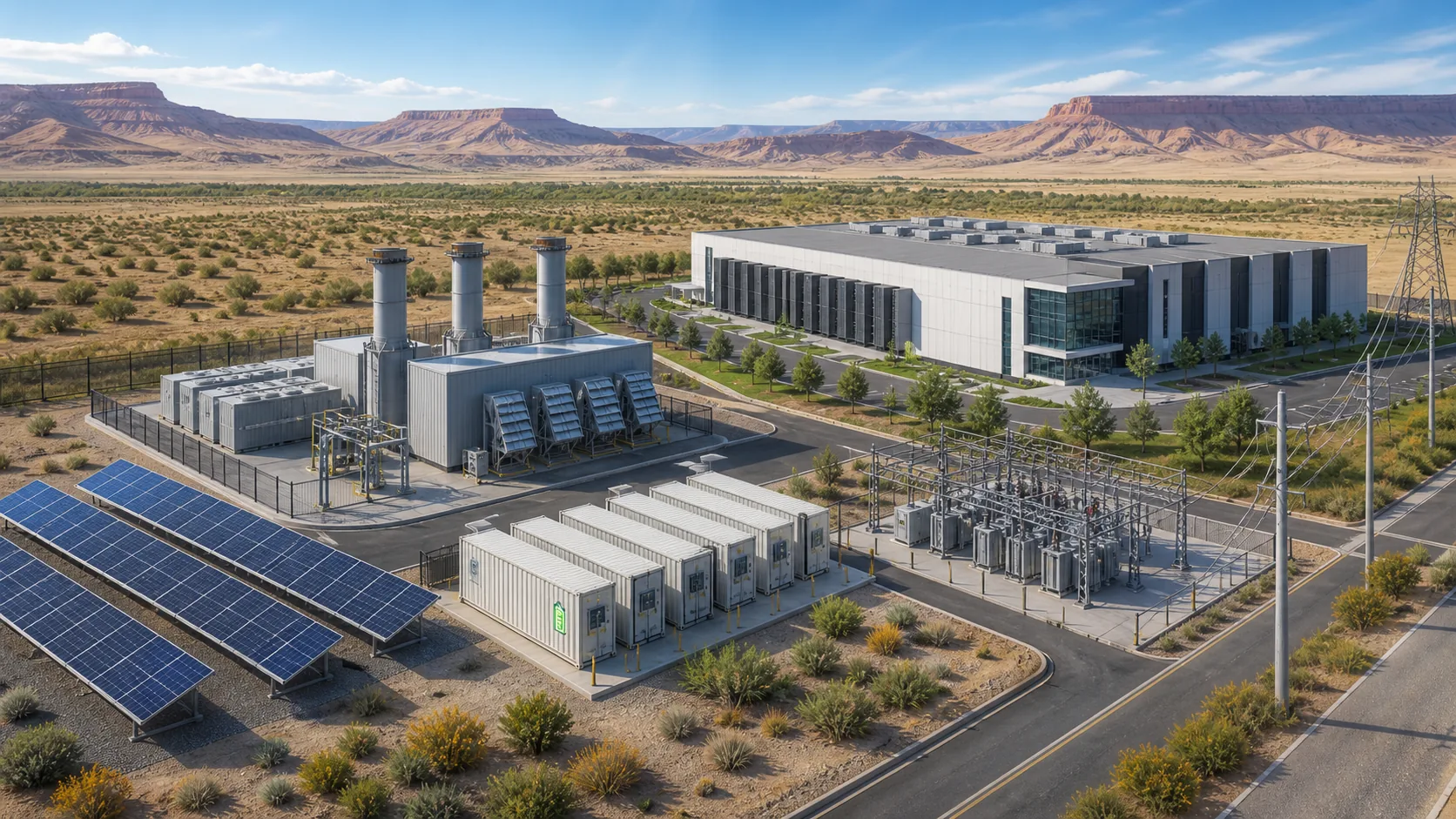
Concept image: related filings describe a 400 MW natural-gas plant, 333 MW solar plant, and 800-1,600 MWh of storage. The public concern is phasing and reliability, not just the presence of generation.
Power approach
Not relying only on outside grid power.
The project record points to dedicated nearby power infrastructure: natural-gas generation, solar, storage, and interconnection planning. That is important because data centers can be large, steady electricity users.
Natural-gas generation can provide dispatchable power when solar output is low.
Battery storage can smooth short-term demand and support reliability.
Grid interconnection details still matter and should stay public.
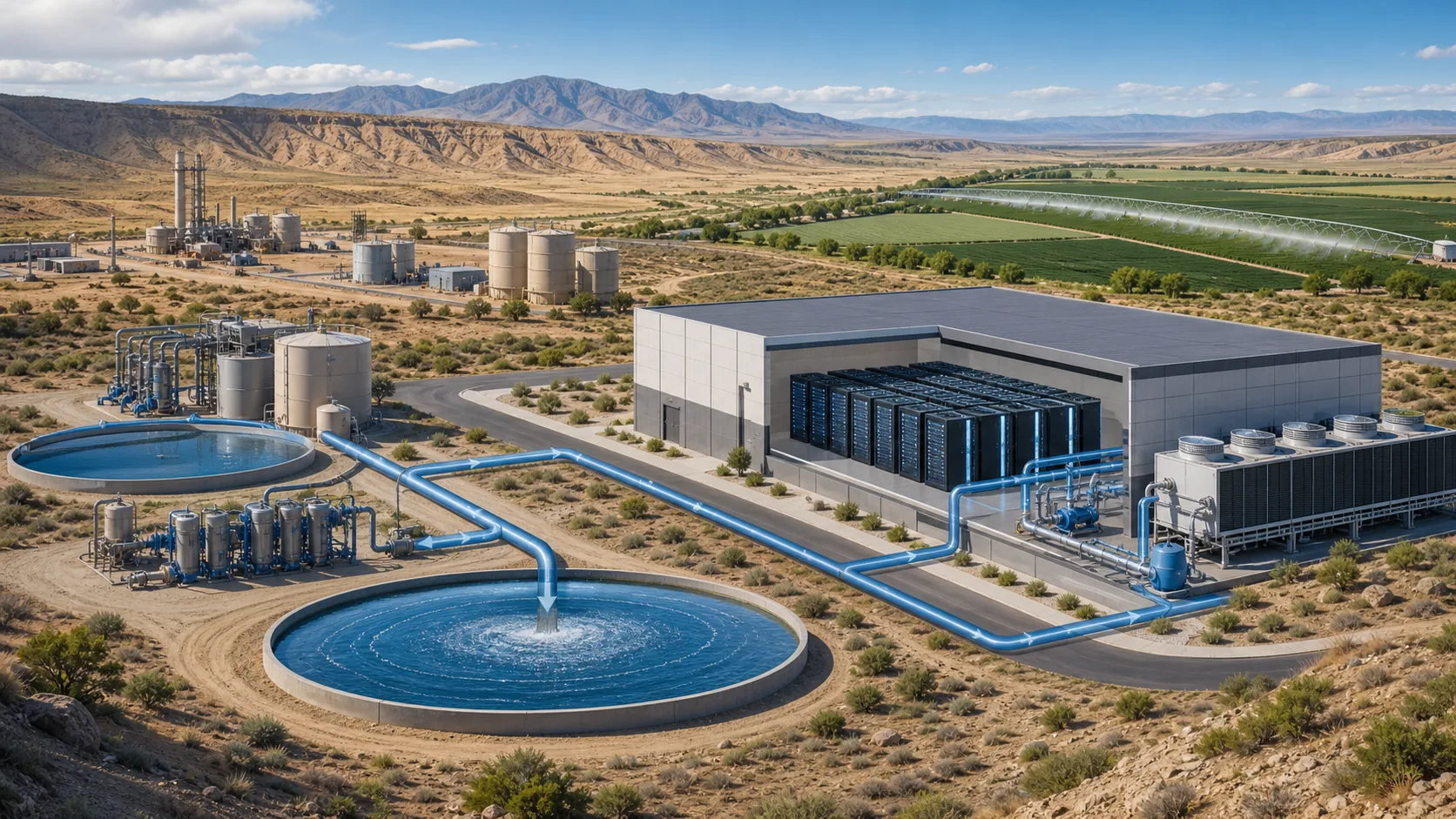
Concept image: the public filing says process/cooling water would largely come from Wasatch Energy Management through a shared process-water system. Final operations should publish water source, volumes, permits, and treatment assumptions.
Water approach
Using a process-water system instead of relying on culinary water.
Available filings say culinary water use would be limited to O&M personnel and landscaping, while process/cooling water would largely come from Wasatch Energy Management through a shared process-water system. Related reWater materials describe produced-water recycling and storage capacity, but the data-center water source should continue to be documented specifically.
Residents should be able to see where cooling water comes from.
Reuse/process-water sourcing can reduce pressure on potable supplies if operated as described.
Monitoring and permit updates should be published as the project advances.
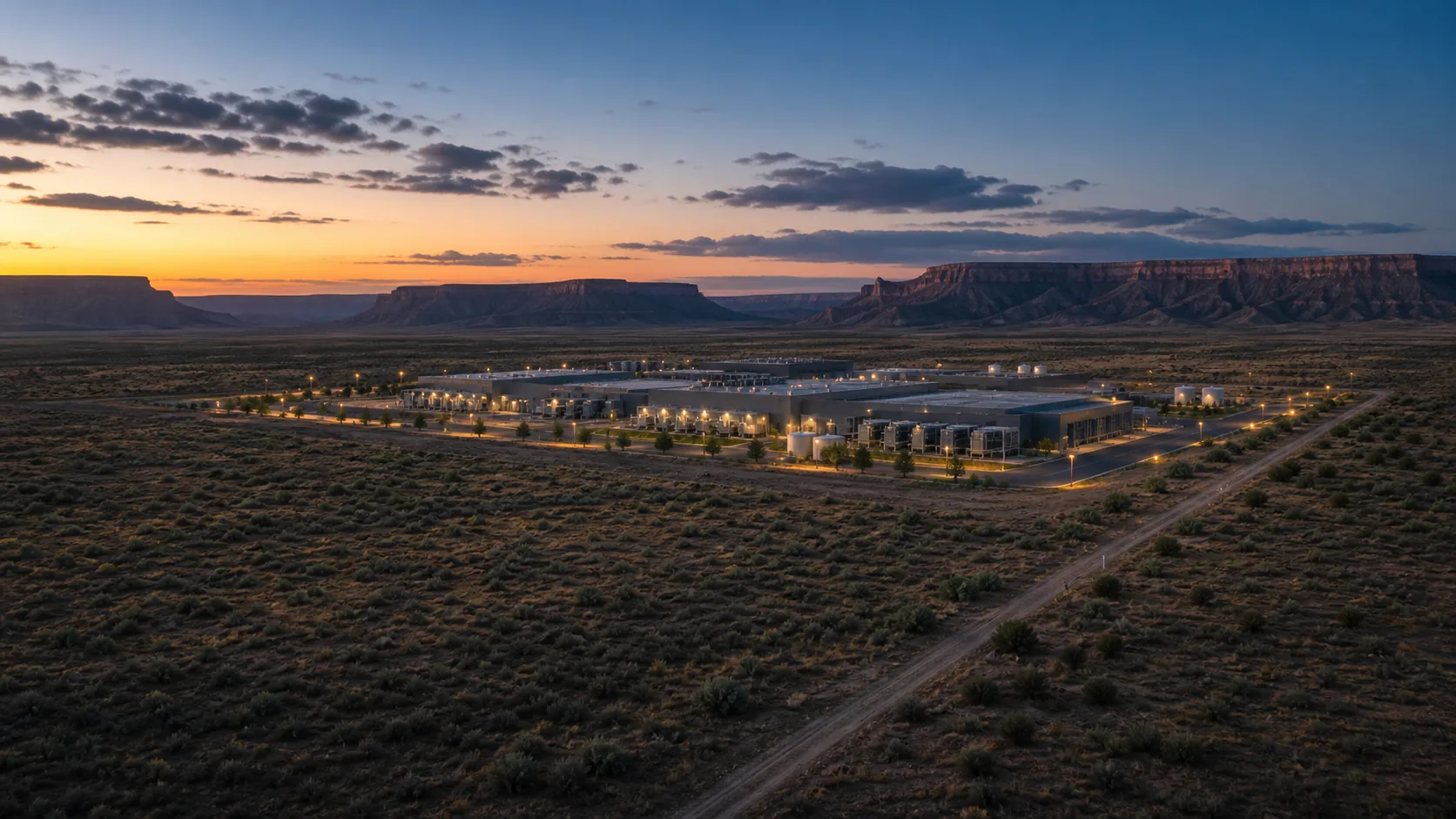
Concept image: for a remote site, distance from neighbors, interior equipment placement, operating limits, and downward-shielded lighting are likely the more relevant mitigation tools.
Noise and light
Remote location helps, but it should still be documented.
Data center noise usually comes from cooling equipment, transformers, construction, and generation equipment. The mitigation plan should identify modeled sound levels, setbacks, equipment placement, construction hours, lighting controls, and complaint response.
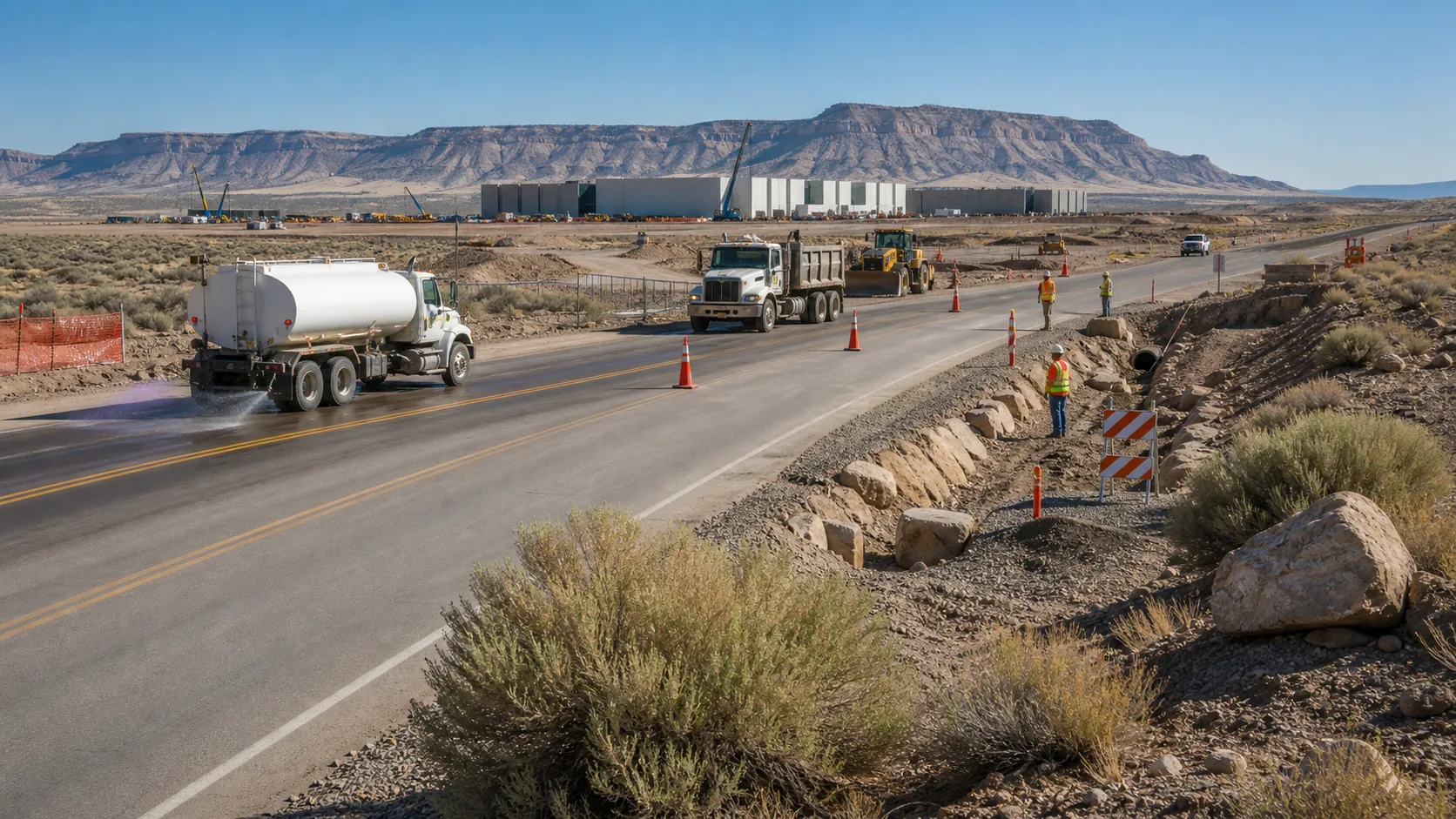
Concept image: construction can be managed with haul routes, dust control, road maintenance agreements, marked entrances, and emergency access planning.
Construction and roads
Traffic impacts should be planned, posted, and updated.
The project narrative references a transportation plan. A production site should publish construction routing, heavy-haul timing, dust-control practices, and who is responsible for road repair or maintenance.